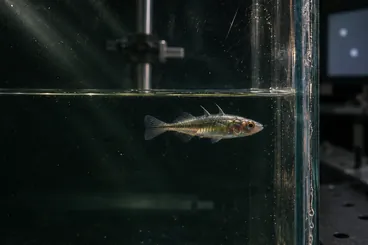
Study method
Inferring social associations from field observations
Choose two birds to see how often they visited a feeder together in this worked example.
Selected pair
C–D shared 2 events.
All six records included.
Shared visits at 08:30, 09:15.
Feeder visits
The six rows are example events. A shared event includes both birds.
| Time | Birds present | Record |
|---|---|---|
| 08:00 | A · B · C | Included |
| 08:15 | A · B | Included |
| 08:30 | B · C · D | Shared event |
| 08:45 | D · E | Included |
| 09:00 | D · E · F | Included |
| 09:15 | C · D | Shared event |
Shared visits
Each cell counts the events two birds shared.
| A | B | C | D | E | F | |
|---|---|---|---|---|---|---|
| A | — | 2 | 1 | 0 | 0 | 0 |
| B | 2 | — | 2 | 1 | 0 | 0 |
| C | 1 | 2 | — | 2 | 0 | 0 |
| D | 0 | 1 | 2 | — | 2 | 1 |
| E | 0 | 0 | 0 | 2 | — | 1 |
| F | 0 | 0 | 0 | 1 | 1 | — |
Social associations
Thicker lines join birds seen together more often.
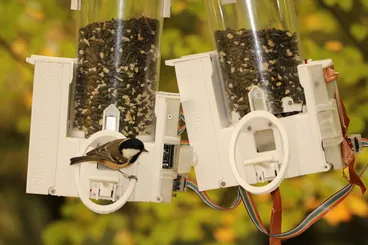
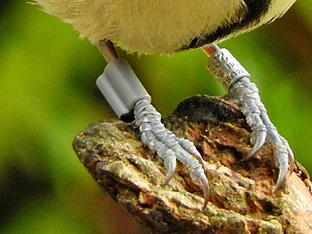
Recording feeder visits
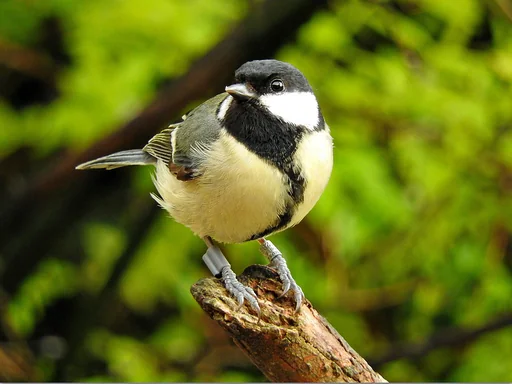 Electronic leg ring
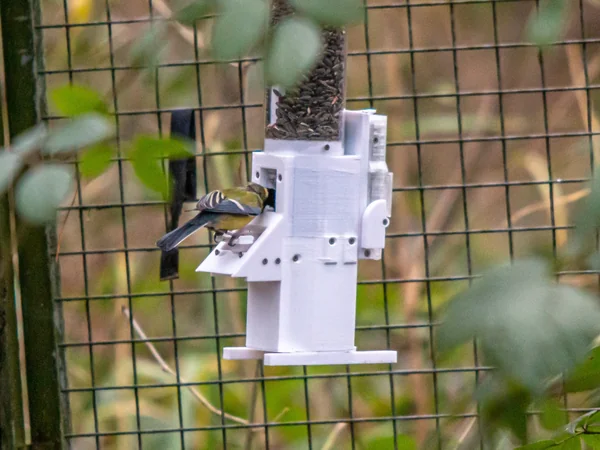 Monitored feeder
What the records show
Sharing a feeder tells us two birds were seen together. Where feeders are placed also affects which birds meet.